
Custom business applications
Business applications that fit the process, not the other way round
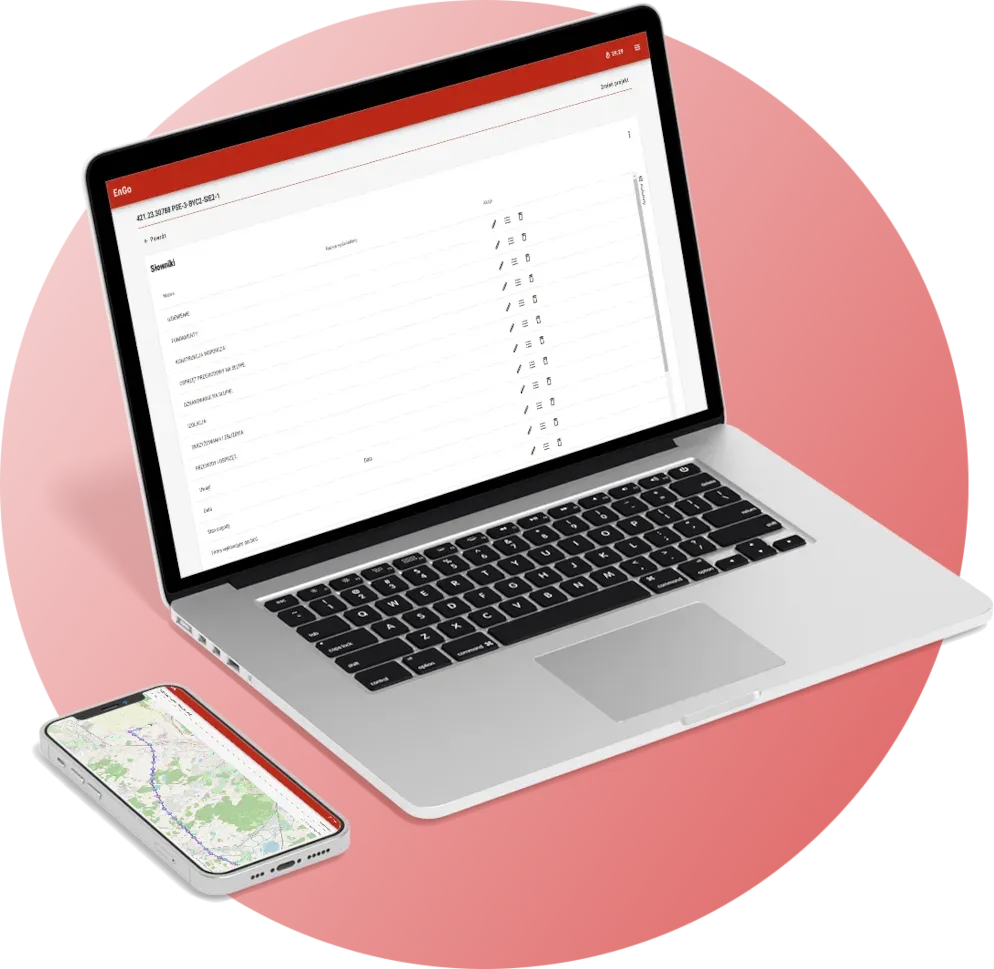
We design and develop business applications from process analysis to production rollout. We build systems that integrate scattered data, support the work of teams and give control over how cases progress.
Context
Why it matters
Off-the-shelf software handles well what every company does in a similar way. Trouble starts where an organisation has its own way of working. Forcing the process to fit the tool ends with spreadsheets kept alongside the system and data retyped by hand.
A custom application mirrors how work really flows. We work with the client’s existing infrastructure and build web solutions that match their requirements for integration, security and maintenance: on-premise, in the cloud or in a hybrid model.
Benefits we can state honestly
- Less manual retyping of data
- Faster flow of information
- Clear responsibility for the process
- Easier analysis of events
- A single source of data
Scope
What we build most often
Portals and back-office systems
B2B web applications and admin panels for internal teams and partners.
Case workflows and approvals
Multi-step forms, validation, statuses and approval paths.
Roles and permissions
Managing roles, permissions and segregation of duties.
Registers
Cases, orders, complaints, documents and transactions in one place.
Dashboards and reports
Operational views, reporting and analytics for management.
Tools for field work
Geolocation and map data in applications for field teams.
Diagram
From process to working application
- 01 Process Current and target state
- 02 Data model Roles, exceptions, rules
- 03 First version Narrow, complete scope
- 04 Integrations ERP, directories, APIs
- 05 Maintenance Development and support
A practitioner’s view
How to tell a spreadsheet is no longer enough
A spreadsheet is a great tool for one person and one task. It fails when several departments use the same data and the state of a case is decided by the colour of a cell. Then nobody knows which version is current, who changed a value or why.
A transactional system solves this at the source: every change has an author and a date, rules check data on entry, and permissions define who sees what. The benefit is not “digitisation” but the end of manual reconciliation and the ability to reconstruct the history of every case.

Questions
Frequently asked questions
Where does a project start?
With understanding the process: who takes part, what data flows through it and where delays arise today. Only then do we agree the scope of the first version.
Can the application run on our infrastructure?
Yes. We build solutions that run on-premise, in Microsoft Azure or in a hybrid model, depending on the project requirements.
What happens after go-live?
We can move on to maintaining and developing the system on agreed terms. We agree the maintenance plan before launch, not after the first failure.
See also
Related services
Service
Mobile apps and PWA
We build Progressive Web Apps that run in the browser and on mobile devices, online and offline. They prove their worth wherever work happens far from a desk.
MoreService
Systems integration
We connect applications and enterprise systems so that information entered in one place is available wherever it is needed. No manual retyping and no discrepancies.
MoreService
Process automation
We automate repetitive steps where the rules are known: validation, approval flows, notifications and reports. Decisions stay with people.
MoreLet’s talk about your project
Describe the requirement or the problem you are facing. We will tell you whether a ready product is enough or a custom solution is needed.