Access audit next month and permissions still in a spreadsheet?→ sara.next
braf.tech

Whistleblowing system

A reporting channel employees are able to trust

whiblo is an internal channel for reporting irregularities and breaches of law within an organisation. It combines an accessible reporting channel with tools for case handlers: confidentiality of the reporter, two-way correspondence, access control and documented actions. It supports meeting the requirements of the Whistleblower Protection Directive.

  • Directive (EU) 2019/1937
  • Polish Whistleblower Protection Act
  • GDPR
  • AML
  • WCAG 2.1
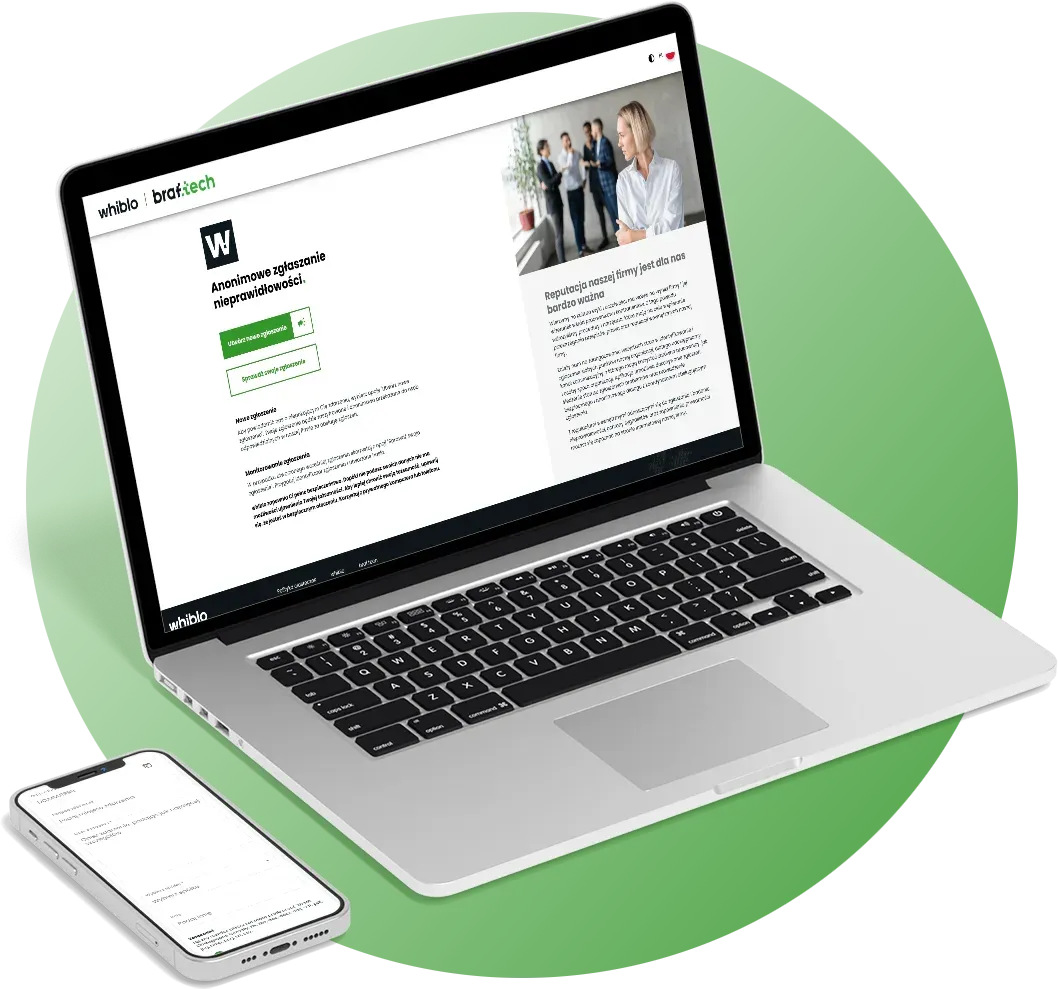
whiblo on a laptop and phone screen
Launch
3–5 days
Data isolation
Separate database per client
Data protection
Encryption in transit and at rest
Accessibility
WCAG 2.1

The problem

The most expensive problems are the ones nobody mentioned

Employees usually know about irregularities long before the board does. They stay silent when they do not believe in anonymity or in the report changing anything. The organisation then hears about the matter from an inspector, a counterparty or the media.

Whistleblower protection rules require an internal reporting channel, confidentiality of identity and meeting deadlines for acknowledgement and feedback. A mailbox does not meet those conditions: it does not protect identity and leaves no credible trace of how a case was handled.

whiblo gives the reporter a secure form and the option to continue the conversation without revealing their identity, and gives case handlers an orderly process and a current view of all reports.
A reporting channel works when an employee believes two things: that nobody will recognise them and that somebody will answer.

From braf.tech implementation experience

Who it is for

  • Employers covered by whistleblower protection law
  • Public offices and institutions
  • Corporate groups with many companies
  • Compliance, HR and legal departments

How whiblo works

A safe report, an orderly process

01

Confidential and anonymous reports

Secure, intuitive submission through a browser and on mobile devices.

02

Two-way correspondence

The conversation with the whistleblower continues after the report, without revealing their identity.

03

A form that fits the organisation

Questions, content and messages matched to internal processes and standards.

04

Case handling and monitoring

Automated handling steps, ongoing analysis of reports and reporting.

05

Data protection

Encryption of reports and attachments and a separate database for every client.

06

Roles and accountability

Roles and permissions, segmented access to cases, an activity log and handling history.

Implementation

Five steps to a working channel

  1. 1

    Agreement

    The contract is signed.

  2. 2

    Configuration form

    The client completes the application configuration form.

  3. 3

    Environment

    The braf.tech team configures the environment.

  4. 4

    Link on the website

    The company places a link to whiblo on its website.

  5. 5

    Coordinators

    Coordinators are added and granted permissions.

A practitioner’s view

Confidentiality is not the same as anonymity

The two terms are often used interchangeably, yet they mean different things. With a confidential report the whistleblower’s identity is known, but only to the people authorised to handle the case. With an anonymous report nobody knows it. A good channel supports both and in both protects data from outsiders, including system administrators.

An anonymous report has one weakness: if nobody can ask for details, the case often cannot be verified. That is why two-way correspondence matters, allowing the reporter to return to the conversation without disclosing who they are.

The rules set the rhythm of handling: acknowledgement of receipt within 7 days and feedback within 3 months at the latest. In practice deadlines slip not out of ill will but because nobody tracks them in one place. The tool should do that for people.

Trust in the channel is also built through accessibility. The form must work on a phone, be understandable without instructions and meet digital accessibility requirements, because a report is rarely written at a desk during working hours.

Mistakes that cost a channel its credibility

  • An ordinary mailbox used as the reporting channel
  • IT or line managers able to read reports
  • No feedback for the person who reported
  • One form for every company and every type of case

This description is general and does not constitute legal advice.

whiblo on screen

The path of a report: from form to case handling

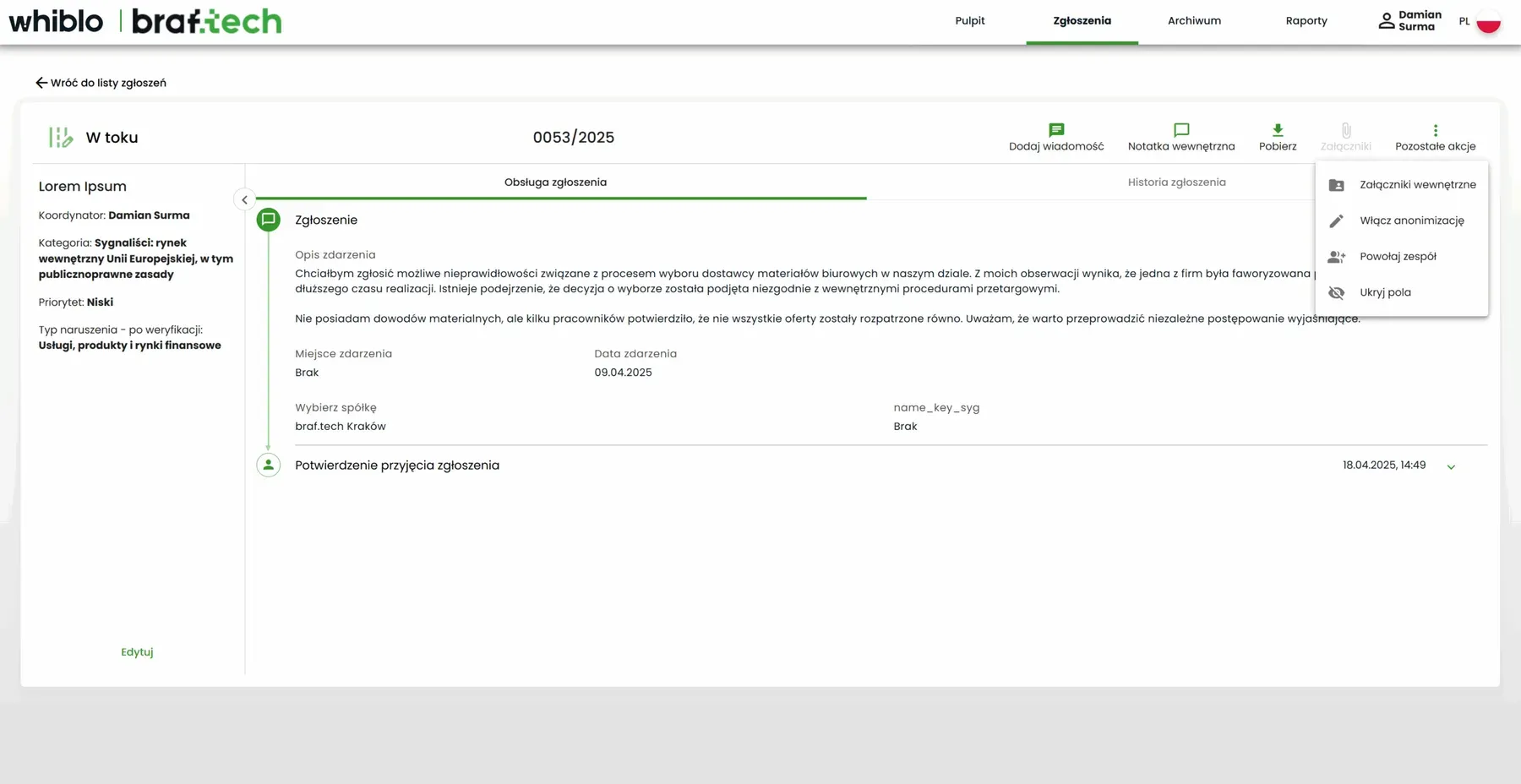
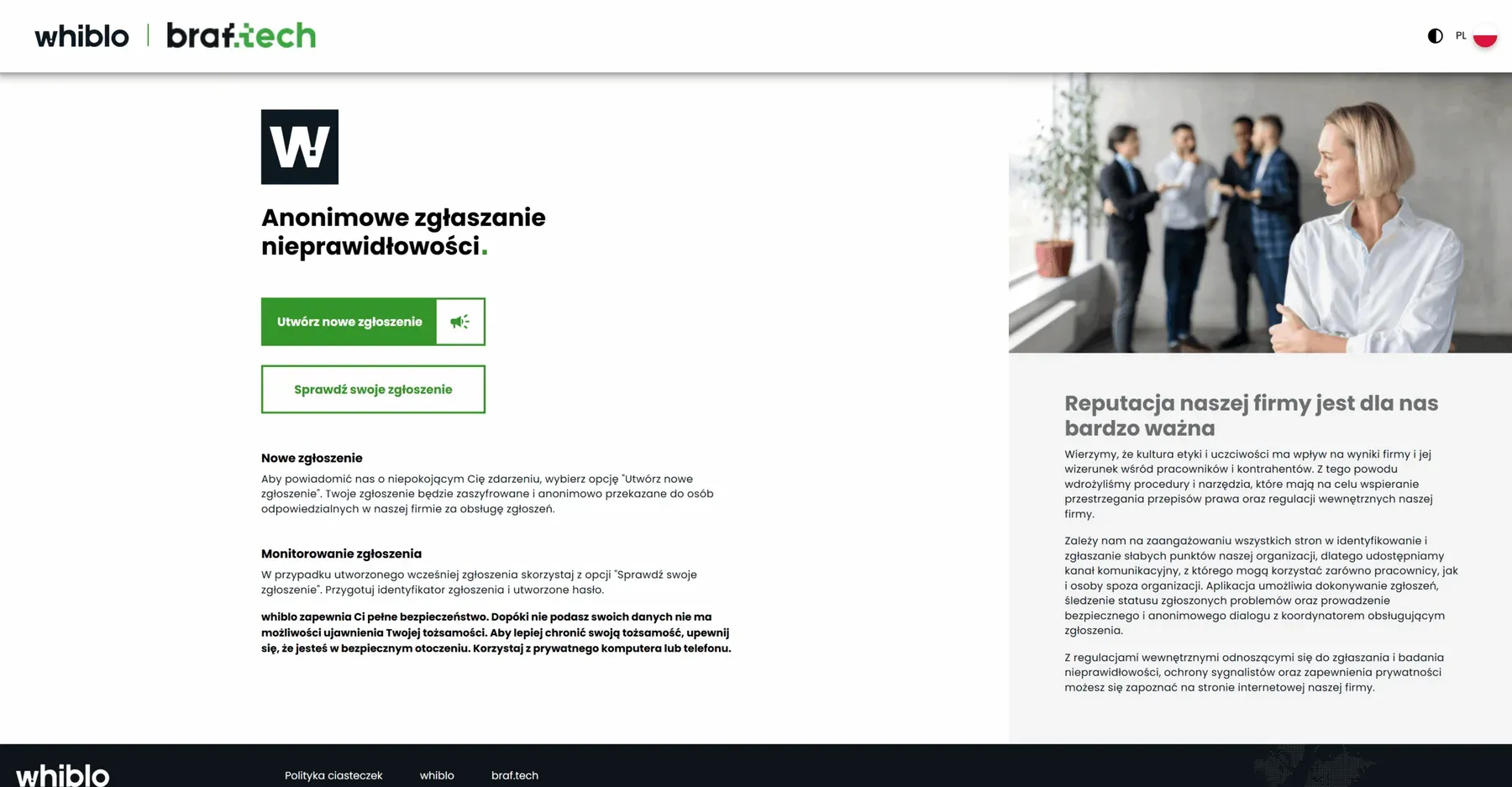
  • Reporting channel page tailored to the organisation

    Reporting channel page tailored to the organisation

  • Report form

    Report form

  • Confirmation that the report was received

    Confirmation that the report was received

  • List of reports in the handling panel

    List of reports in the handling panel

  • Report details

    Report details

See whiblo on your own example

During the demo we show the process from start to finish and answer questions from IT and compliance.